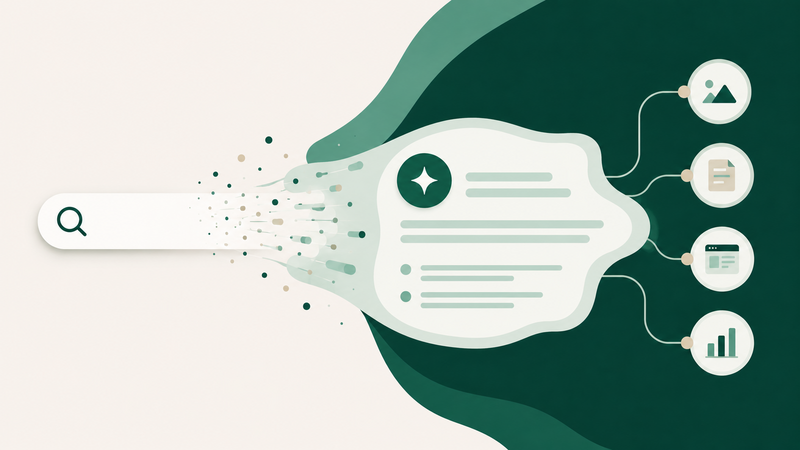
How AEO and GEO have collapsed together
Answer Engine Optimisation (AEO) is the practice of getting your website into the results, this is focussed around systems like Google's AI Overviews. This is closer to traditional SEO, it's how can we get this content to be what get's shown to the user over my competitors content.
Generative Engine Optimisation (GEO) is focussed around building the visibility, authority, and consistency signals that makes AI trust your brand enough to mention and recommend it. Even in answers you might not have content targeting. This is the broader activity that makes your brand trusted and referenced in AI platforms.
Search Engine Optimisation (SEO) is getting your content to rank in the highest place in the list of results a search engine provides for a user's query. This uses a combination of optimising content for relevancy to the users search terms as well as reinforcing the websites authority.
If you are having trouble differentiating between the terms, especially AEO and GEO, that might be because the relevance of all of these terms has become increasingly eroded as search engines and AI platforms have evolved. Google now contains traditional results, featured snippets, AI Overviews and AI Mode all within the same ecosystem. You can read more about these definitions in our article on them.
Neither replaces SEO as Google still continue to display traditional search rankings, which continue to drive clicks. But as Google continues to move towards an all in one, AI and Search platform, this is further blurring the lines between these aspects.
AEO and GEO lose their fiunctional difference when the exact same tactics you might use are the same for both. This is why it's becoming increasingly difficult to generate seperate strategies for them.
Why I/O 2026 made this even more urgent
On 19 May 2026, Google announced the biggest changes to Search of the last 20 years. This makes every single update to this point seems small by comparison.
The traditional search format is disapearing.
Google is now pushing conversations instead the traditional list of links. To this end they have made AI Mode is the default experience globally. This is one of the most significant changes, as it changes the search model away from the traditional SERPs. It's likely that this is a interim position as Google gauges uptake and usage in preperation for the changes announced in their I/O conference.
Google doesn't just want to be a search engine anymore.
Part of the announcements which has garnered less focus are the information agents. These will allow the user to run background tasks from Google, executing tasks across the web. Booking tickets and other tasks could become automated using these agents, bringing what has been more complex AI functionality to a broader spectrum of people.
The no click problem has expanded.
SISTRIX found that click-through rates drop from 27% to 11% for the top result when an AI Overview is present. Ahrefs measured a 58% CTR reduction across 300,000 keywords with AI Overviews. Impressions are also down as there is less room on the first page for organic results. So your result is less likely to be shown and when it is, less likely to be clicked on.
From search to AI surface
The final part of the I/O announcements have yet to land and we still don't really know what it's going to look like. Google announced that the search results will be changing significantly as they leaverage Antigravity and Gemini's flash 3.5 agentic coding into search. Meaning it will be able to build generative UI, in other words you can affect how the page displays on the fly. According to how you search, the format of the results could be completely different.
It's unclear at this point if Google will retain a traditional search page at all and how much control the user will have if they want to see one. But back in 2025 they published a really interesting blog post about exactly this which outlined a vision for generative UI:
Generative UI: A rich, custom, visual interactive user experience for any prompt
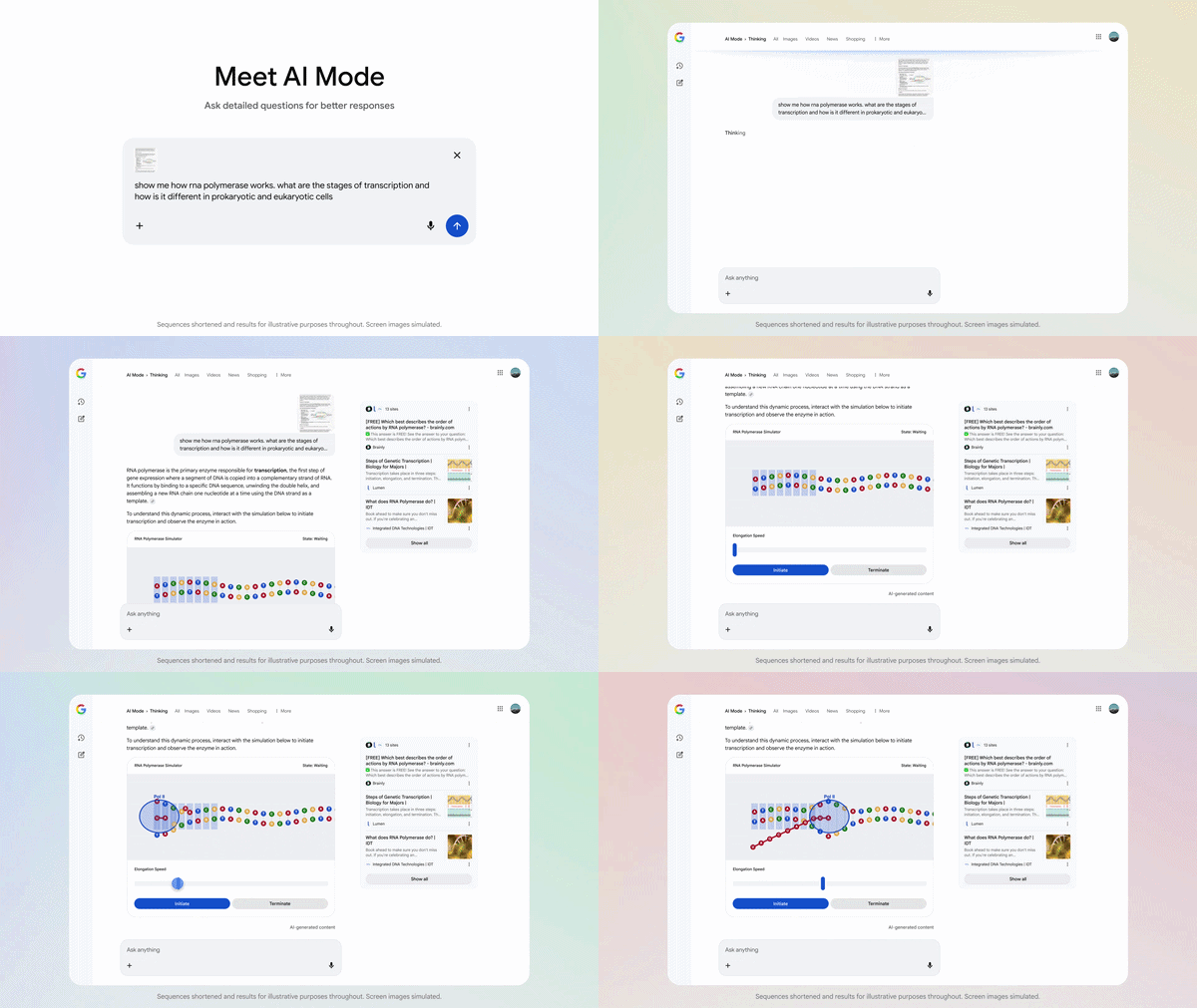
Reading this the experience we're likely to get is one which is deeply interactive and nothing like the search results we have now. Importantly it's going to be deeply interactive and generated from your initial search or prompt. Google positioned this as a replacement to the traditional SERPs, not a suppliment to it.
So when is all this happening?
Google hasn't been forthcoming with an exact schedule, rather they announced it as happening summer 2026. For Google that would be anytime between June and September, but typically really any time in Q3. When this happens it is going to dramatically change the way that search works and it's likely that it will happen without much notice.
What's interesting is that this might generate a new wave of changes in the AI arms race as we see platforms like Claude and ChatGPT either widen in functionality and purpose between them and Google or choose to close that gap.
The core thing that isn't changing is how you interact with search or AI engines, you start off with a prompt. This query is the same building block as a keyword, the terms people commonly use to search with. Making sure your site is properly optimised with those terms continues to be important and that's where Wordtracker continues to shine. If you want help with optimising your content specifically for AI with those keywords Qurmy is an AEO and GEO optimisation tool that you can use to help action them.
SEO is just the name, it's the activity that counts
SEO has always been changing, as the arms race between us and Google has never stopped. The search results are now updated on a near constant basis with additional core updates on top. We've written previously Google has been looking for an out for a while from the traditional link based organic results and this might be it. Changing the core mechanism used to power the results is Google flipping the table over and starting from fresh.
What doesn't change is that behind every result Google displays is a person with a question which you can find in your keyword data and an answer that you can provide with your content. How Google choses to connect the user to your content is absolutely changing. To the extent that we may even stop calling that process SEO. But it doesn't matter what we call it at the end of the day. It's still people searching for the answer to a question.