
Ahrefs vs Keysearch (vs Wordtracker): Which tool to choose in 2026?
SEO tools keep adding features you'll never use. Do you need all these features, or would you be better served by a more focused approach?
The smart questions to ask when comparing SEO tools
When comparing Ahrefs vs Keysearch, most comparisons focus on feature counts and database sizes. But smart marketers ask different questions:
- Do you actually need 50+ features, or would mastering 3-5 core tools make you more effective?
- Is your budget better spent on one expensive platform or multiple specialized tools?
- Are you running an agency that needs enterprise features, or are you focused on growing your own projects?
- Would you rather have a tool that does everything adequately or one that does specific things exceptionally well?
- Is the learning curve and complexity worth it for features you might use "someday"?
Ahrefs: The SEO Powerhouse
A comprehensive SEO platform offering an extensive suite of tools backed by one of the industry's largest databases. With features ranging from content gap analysis to link intersect tools, it's built for SEO agencies and enterprises that need comprehensive competitive intelligence.
The premium pricing reflects this extensive feature set—though many individual users and small teams find they only use a fraction of the available tools.
Keysearch: The Affordable Alternative
Positions itself as the budget-friendly option, combining keyword research, rank tracking, content optimization, and competitor analysis into accessible plans. It's designed for bloggers and small businesses who want an all-in-one solution without enterprise pricing.
While it aims to provide comprehensive functionality at a fraction of the cost, the credit-based system can create workflow interruptions, and individual features often lack the depth and polish of more focused alternatives.
Wordtracker: Focused Excellence
Takes a deliberately different approach. Since 1998, we've resisted the feature arms race to focus exclusively on what SEO professionals use daily: keyword research, competitor keyword analysis, and rank tracking.
By staying lean and avoiding venture capital pressure, we deliver professional-grade keyword research at genuinely accessible pricing. Our interface prioritizes efficiency and ease of use above all else, helping smart marketers get results in minutes, not hours.
For users who value depth over breadth and prefer mastery of essential tools over feature overwhelm, Wordtracker offers the most affordable focused alternative to all-in-one platforms.
If Wordtracker's focused approach resonates with you, see it in action...
Ahrefs vs Keysearch vs Wordtracker at a glance
Here's the fundamental difference: While Ahrefs and Keysearch compete on feature count, Wordtracker competes on doing the essentials exceptionally well at the lowest price.
| Ahrefs | Keysearch | Wordtracker | |
|---|---|---|---|
| Philosophy | Everything under one roof | Budget all-in-one | Focused excellence |
| Starting Price | $29/month | $24/month | $24/month |
| Hidden Costs | Add-ons and overage fees ★★ | Credit limitations ★★★ | Generous limits ★★★★★ |
| Daily Searches | Varies by plan ★★★ | Credit-based restrictions ★★ | 500 to unlimited ★★★★★ |
| Keyword Database | 28.7 billion keywords ★★★★★ | 2 billion keywords ★★★ | 2 billion keywords ★★★★ |
| Learning Curve | Requires significant training ★★ | Moderate complexity ★★★ | Simple by design ★★★★★ |
| Support | Documentation-heavy ★★ | Responsive team ★★★★ | Direct and personal ★★★★★ |
| Best For | Agencies & enterprises | Bloggers & small businesses | Focused SEO professionals and small businesses |
The philosophy divide: Comprehensive platforms vs focused tools
The SEO tool industry has split into two distinct camps, and understanding this divide is crucial for making the right choice.
Ahrefs represents the platform approach. They've built an empire of interconnected tools—Site Explorer, Keywords Explorer, Content Explorer, Rank Tracker, Site Audit, and dozens more. Each tool talks to the others, creating a web of features that can handle virtually any SEO task. It's undeniably powerful, and for agencies managing multiple clients or enterprises with complex needs, this interconnected ecosystem can be invaluable.
Keysearch attempts to bridge the gap, offering a taste of comprehensive functionality at a more accessible price. They've built keyword research, rank tracking, content optimization, competitor analysis, and backlink checking into one platform. It's the all-in-one approach at a budget price point—but this creates its own challenges. The credit-based system means users often find themselves rationing searches and analyses, while each feature, though functional, lacks the depth you'd get from specialized tools or premium platforms.
Wordtracker has steadfastly maintained its original vision since 1998. We believe SEO professionals need three things done exceptionally well: keyword research, competitor keyword insights, and rank tracking. No content grading, no link analysis, no technical SEO audits. Just the core tools that directly impact your ability to find and rank for profitable keywords.
This philosophical difference impacts everything from pricing to user experience. When you're paying for Ahrefs, you're funding their massive web crawler, their content analysis algorithms, their link database—whether you use them or not. With Wordtracker, you're paying for keyword research excellence and an interface that respects your time. Period.
Pricing structures reveal priorities
Let's examine what you're actually paying for with each platform.
Ahrefs pricing starts at $29/month for their Starter plan with basic features. Most professionals find the Lite plan at $129/month provides the functionality they need, while Standard ($249/month) and Advanced ($449/month) unlock progressively more features and higher limits. Enterprise teams often opt for the $1,499/month plan. The pricing reflects the extensive infrastructure and feature development—it's an investment that makes sense for those who'll use the platform's full capabilities.
Keysearch pricing appears attractive at $24/month for Starter ($20/month yearly) or $48/month for Pro ($40/month yearly). But the credit system creates constant friction. Daily search credits, keyword tracking limits, and restricted access to premium features mean you're always bumping into walls. The credit-based approach particularly impacts power users who need to do extensive research—you might start a competitor analysis only to realize you don't have enough credits for your keyword research.
While the Keysearch pricing page only mentions credits for their AI feature, start a trial and you'll quickly discover that they do have daily credits which are shared across all their features.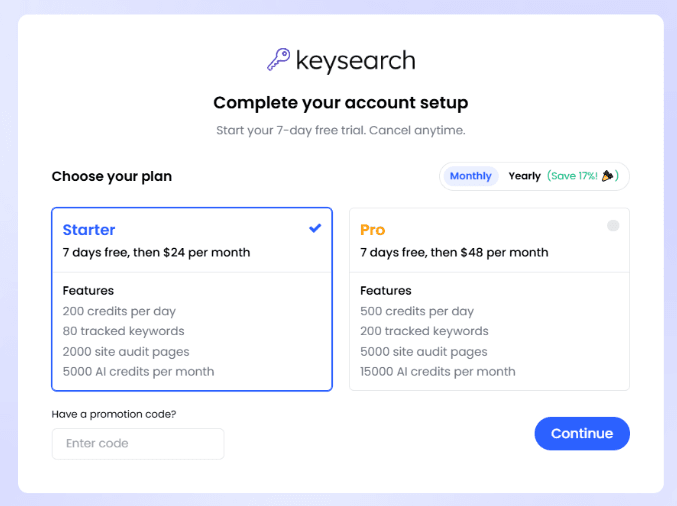 Wordtracker's pricing has been updated to offer even more value for smart marketers:
- Bronze Plan: $24/month (or $17/month annually) - 500 searches/day
- Silver Plan: $24/month (or $17/month annually) - 1,000 searches/day
- Gold Plan: $24/month (or $17/month annually) - Unlimited searches
All plans include access to every feature and all territories. No credits to manage, no arbitrary limits on core features, no "contact us for pricing" enterprise tiers. Even our Bronze plan's 500 daily searches translates to 15,000 searches per month, which should be more than enough for most SEO professionals. We've maintained this straightforward pricing model because our lean approach—focused tools, strategic data partnerships, no VC pressure—allows us to profit at prices that would challenge bloated competitors.
Keyword research depth and usability
All three tools offer keyword research, but the experience varies dramatically.
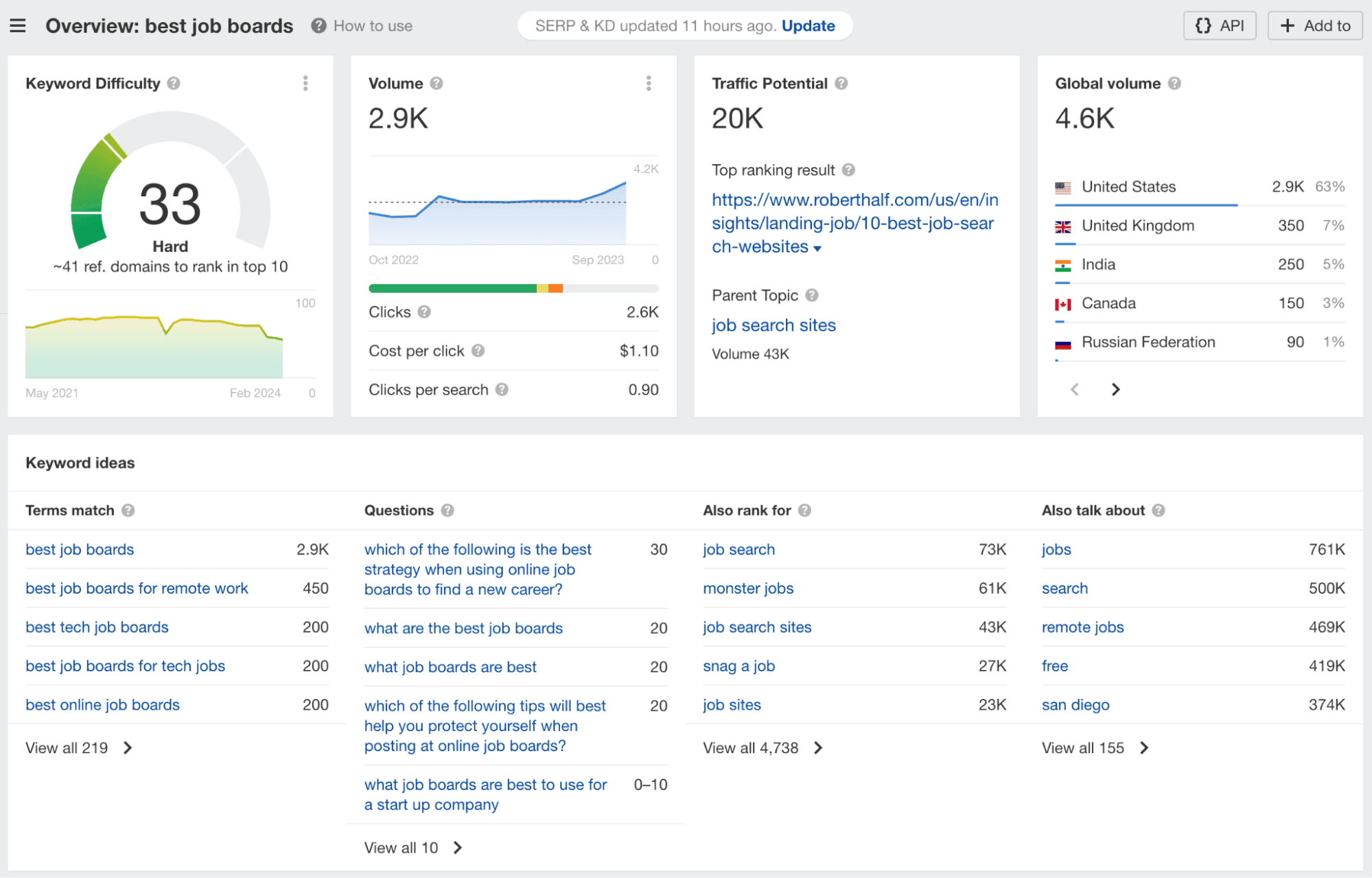
Ahrefs Keywords Explorer delivers massive amounts of data. Enter a seed keyword and receive thousands of suggestions with difficulty scores, traffic potential, and SERP analysis. The interface shows parent topics, question keywords, and traffic share by domain. It's comprehensive to the point where users can spend hours analyzing options instead of taking action—analysis paralysis is real.
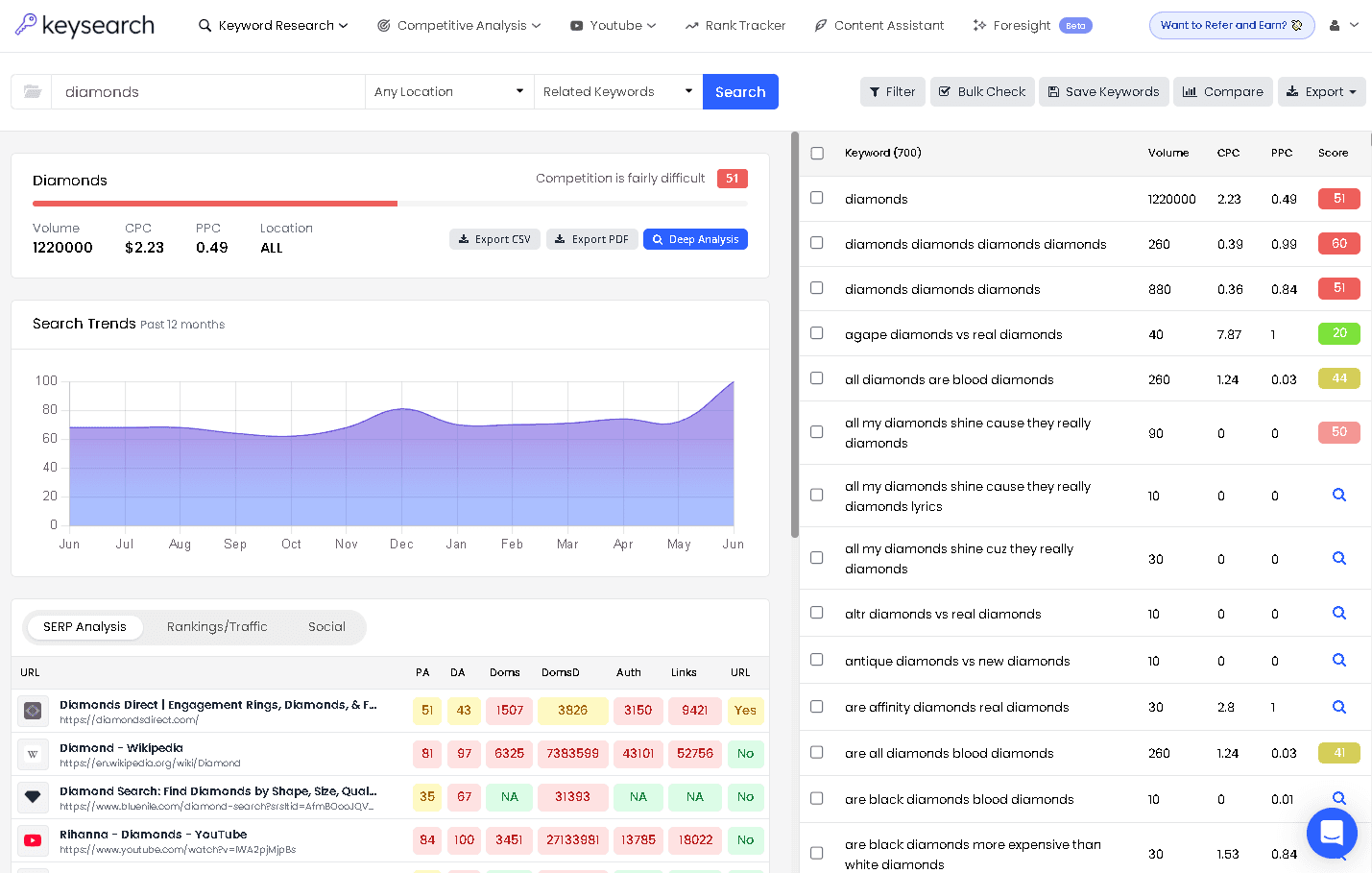
Keysearch takes a simpler approach with color-coded difficulty scores and basic filtering. You get search volume, CPC data, and competition metrics. The interface is cleaner than Ahrefs, but the data feels surface-level. Their "Quick Difficulty" checker processes up to 50 keywords at once, though the simplified metrics don't always reflect ranking reality.
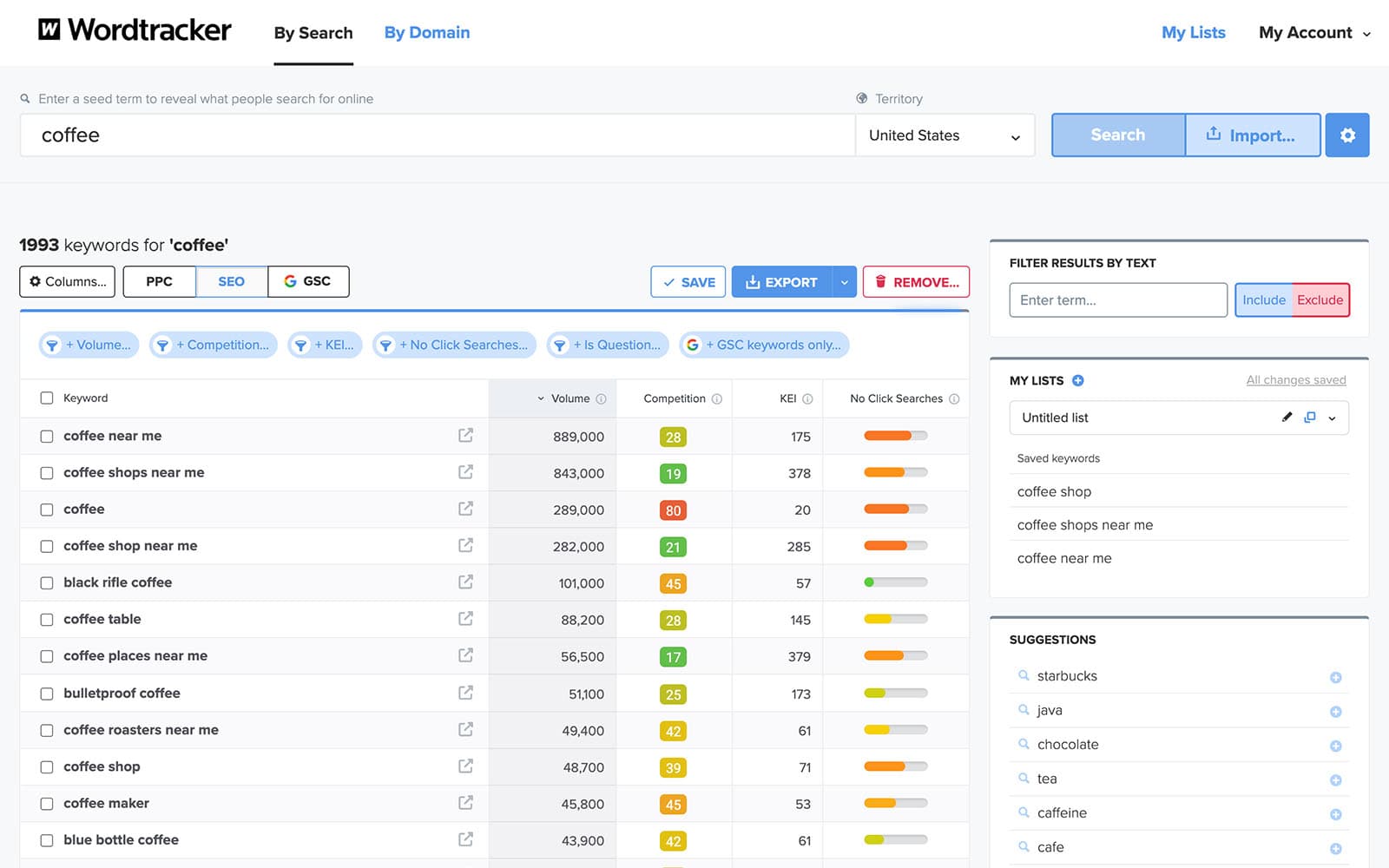
Wordtracker strikes a different balance entirely. Our keyword research interface prioritizes efficiency—get in, find profitable keywords, and get out. We focus on what actually drives results: accurate search volumes (we specifically "ungroup" Google's bundled terms that inflate numbers), reliable difficulty scores based on real ranking factors, and clean presentation of commercial metrics like CPC. Instead of overwhelming you with every tangentially related keyword, we surface the ones actually worth targeting.
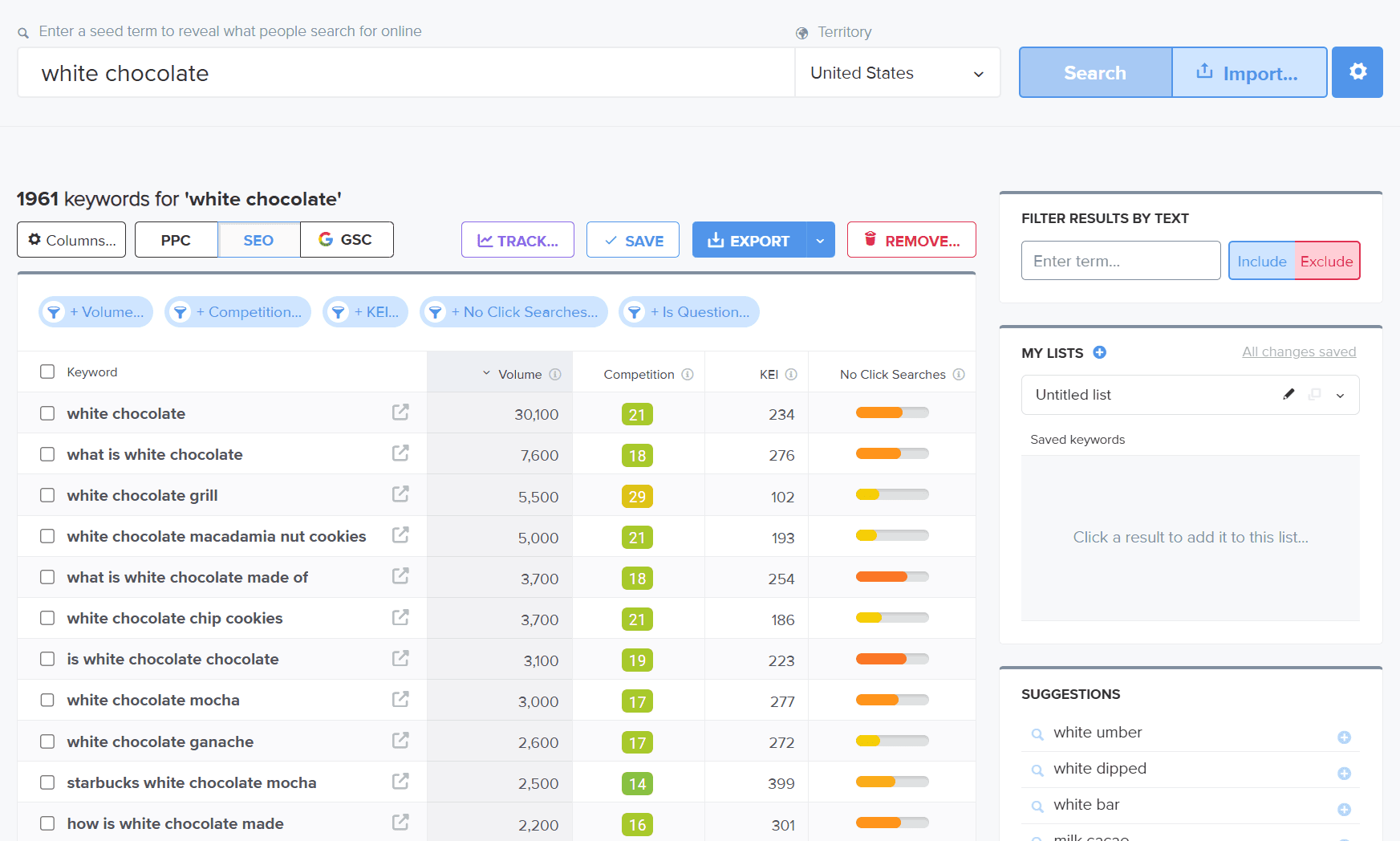
Each approach serves different needs: Ahrefs for comprehensive market analysis, Keysearch for accessible all-in-one functionality, and Wordtracker for focused keyword excellence.
Competitor analysis: Different approaches
How each platform handles competitor analysis reveals their core priorities.
Ahrefs goes deep with Site Explorer, showing every keyword a competitor ranks for, their entire backlink profile, and traffic estimates. You can run content gap analyses, find link intersections, and track competitor rankings over time. For comprehensive competitive intelligence, it's hard to beat this level of detail.
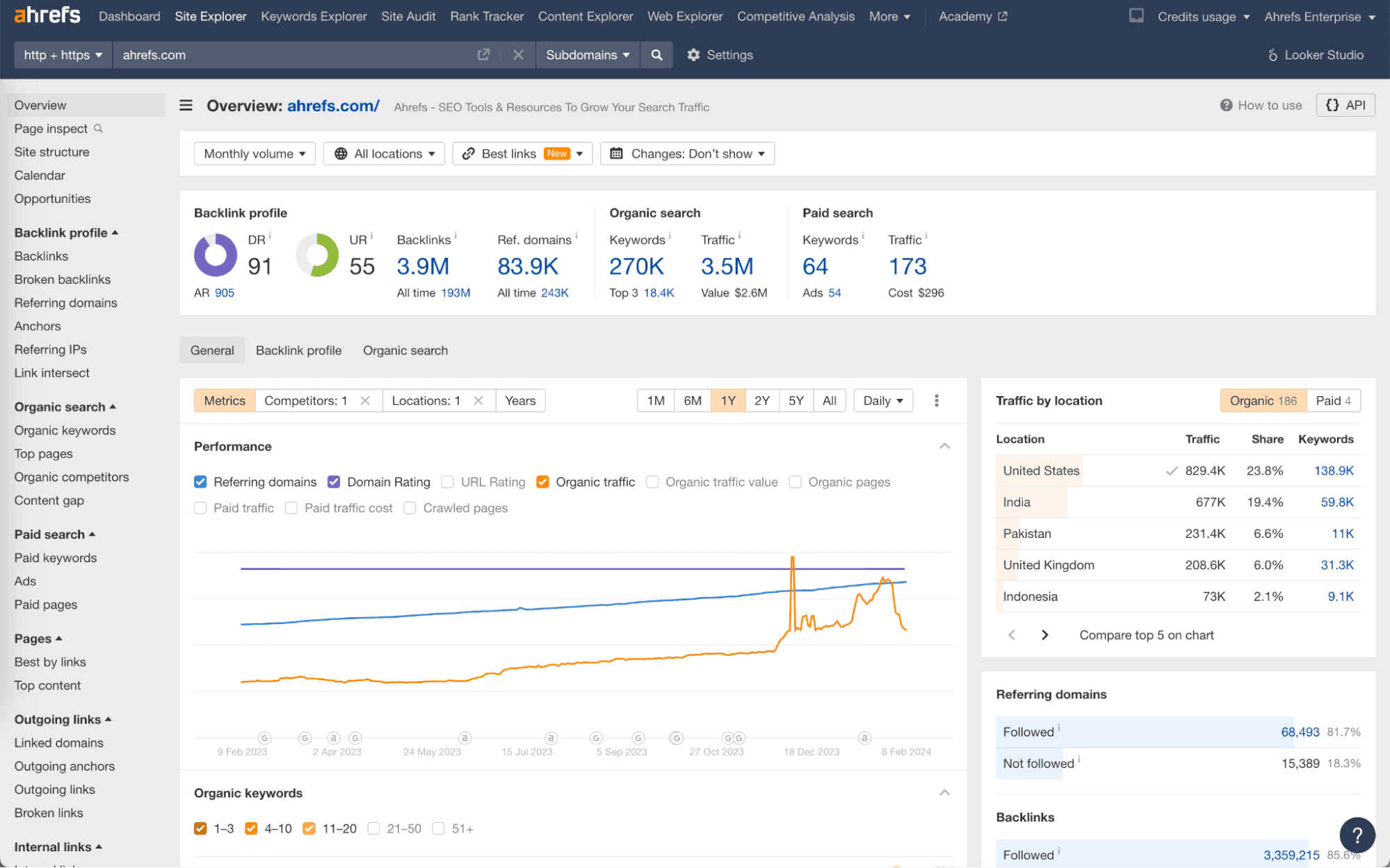
Keysearch offers functional competitor analysis—see their keywords, check their backlinks, analyze their content. It works, but feels like a checkbox feature. The data presentation lacks the actionable insights that turn analysis into strategy. You'll likely export to spreadsheets to really understand what you're seeing.
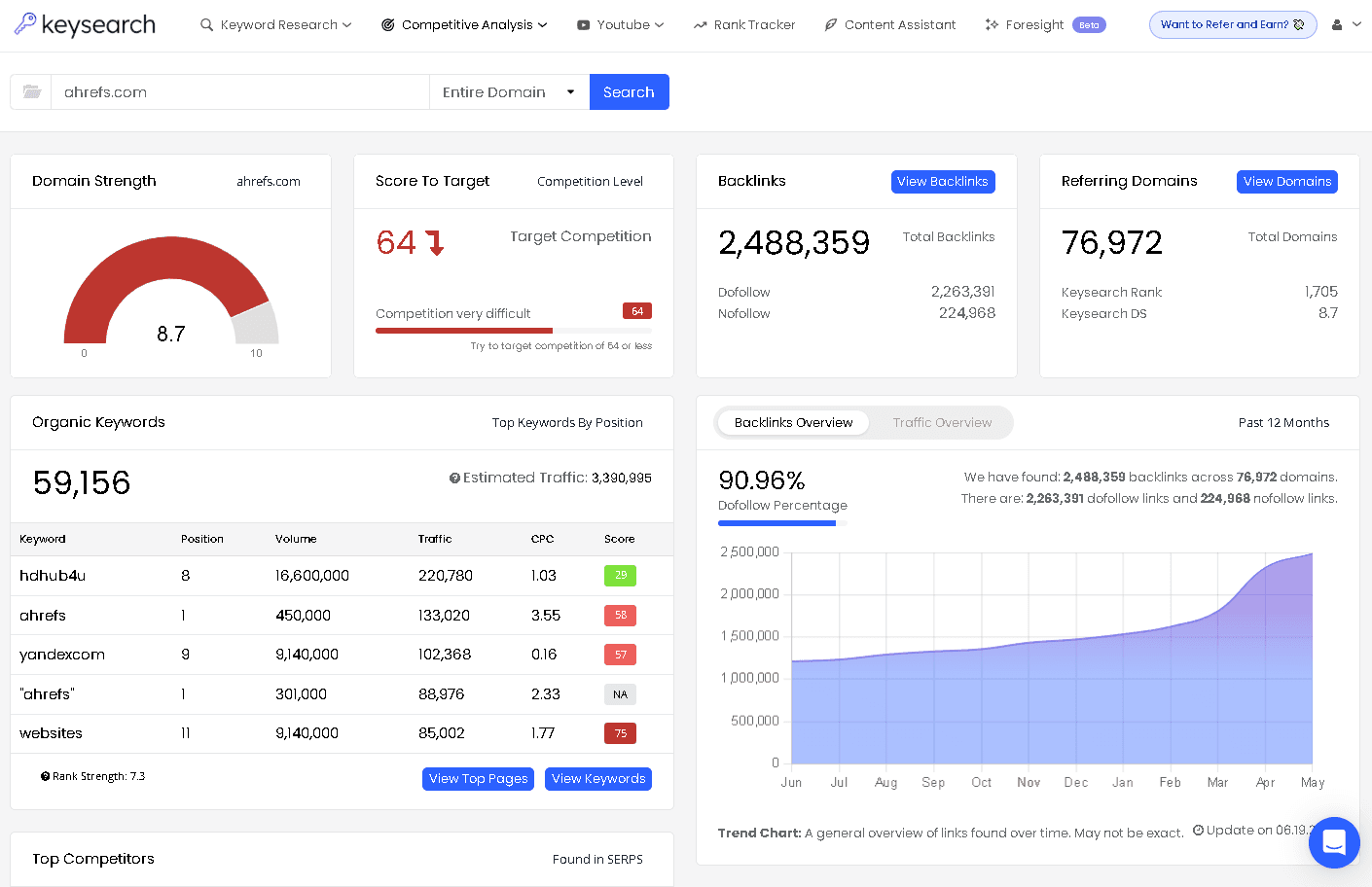
Wordtracker takes a laser-focused approach. Our competitor keyword tool answers one question: what keywords are your competitors ranking for that you're not? No backlink analysis, no content audits—just pure keyword opportunities you can act on immediately. This streamlined approach works exceptionally well for users who want to identify gaps quickly and start creating content.
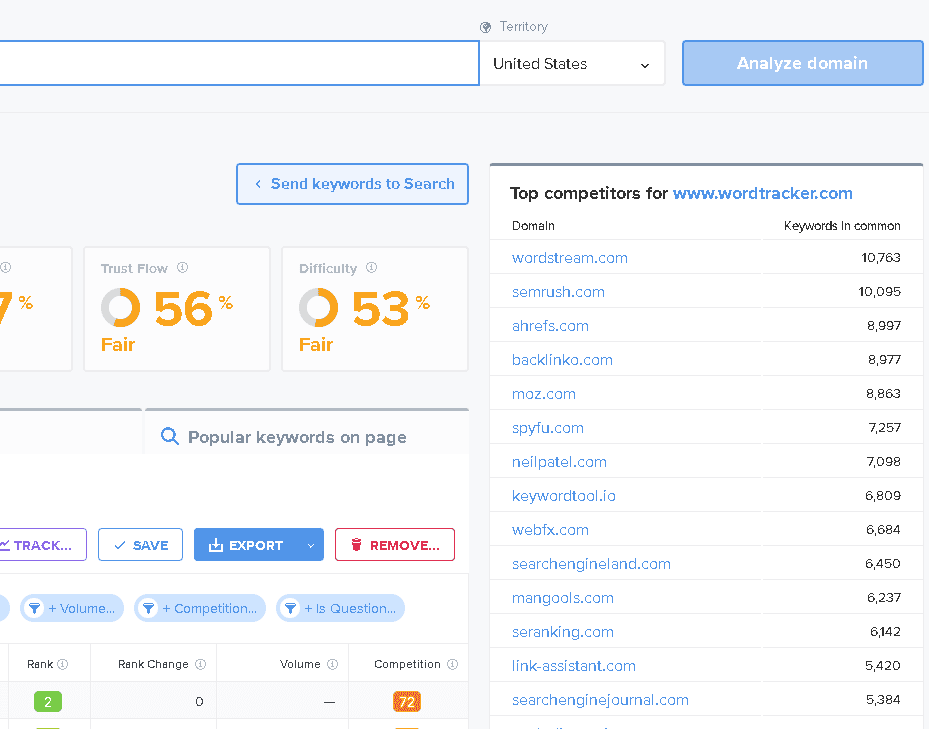
Different approaches for different goals: Ahrefs when you need complete competitive intelligence, Keysearch for accessible competitor insights, and Wordtracker when you want to cut straight to keyword opportunities.
Rank tracking implementations
Every SEO tool offers rank tracking, but the implementations reveal different priorities.
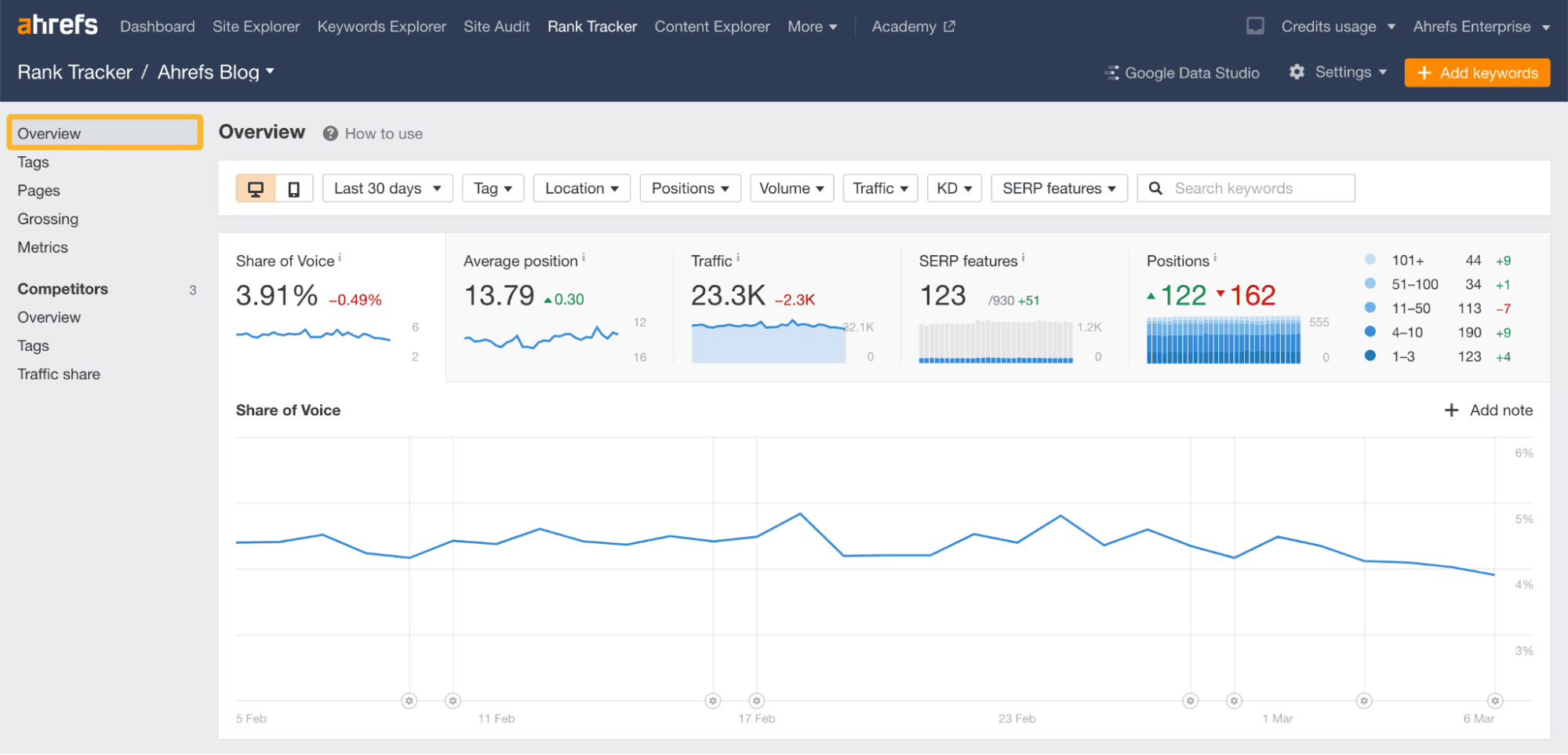
Ahrefs Rank Tracker is feature-rich, tracking desktop and mobile rankings across locations, showing SERP features, and estimating traffic from tracked keywords. The historical data and competitive tracking are excellent for agencies needing detailed client reporting. Setting it up requires navigating their project system, but once configured, it provides comprehensive tracking data.
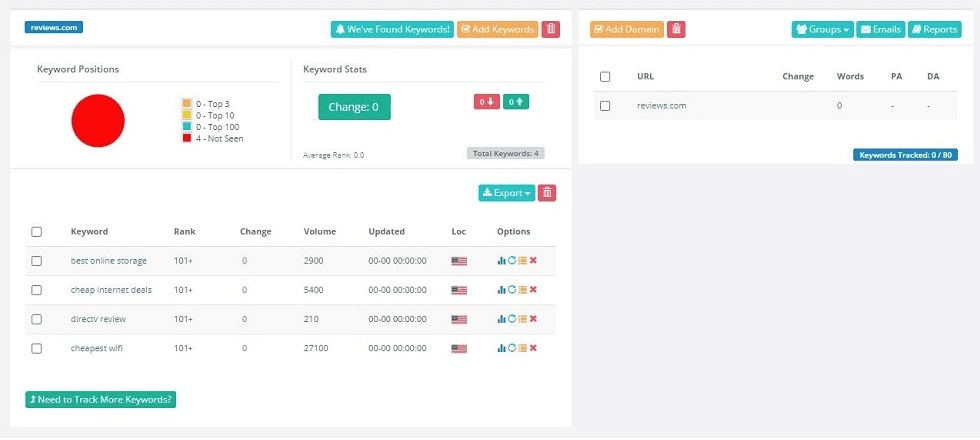
Keysearch includes rank tracking with daily updates and functional reporting. It does the job, but the limits are restrictive—80 keywords on Starter, 200 on Pro. Want to track more? Time to upgrade or juggle projects. The interface is cleaner than Ahrefs but lacks the advanced filtering that power users expect.
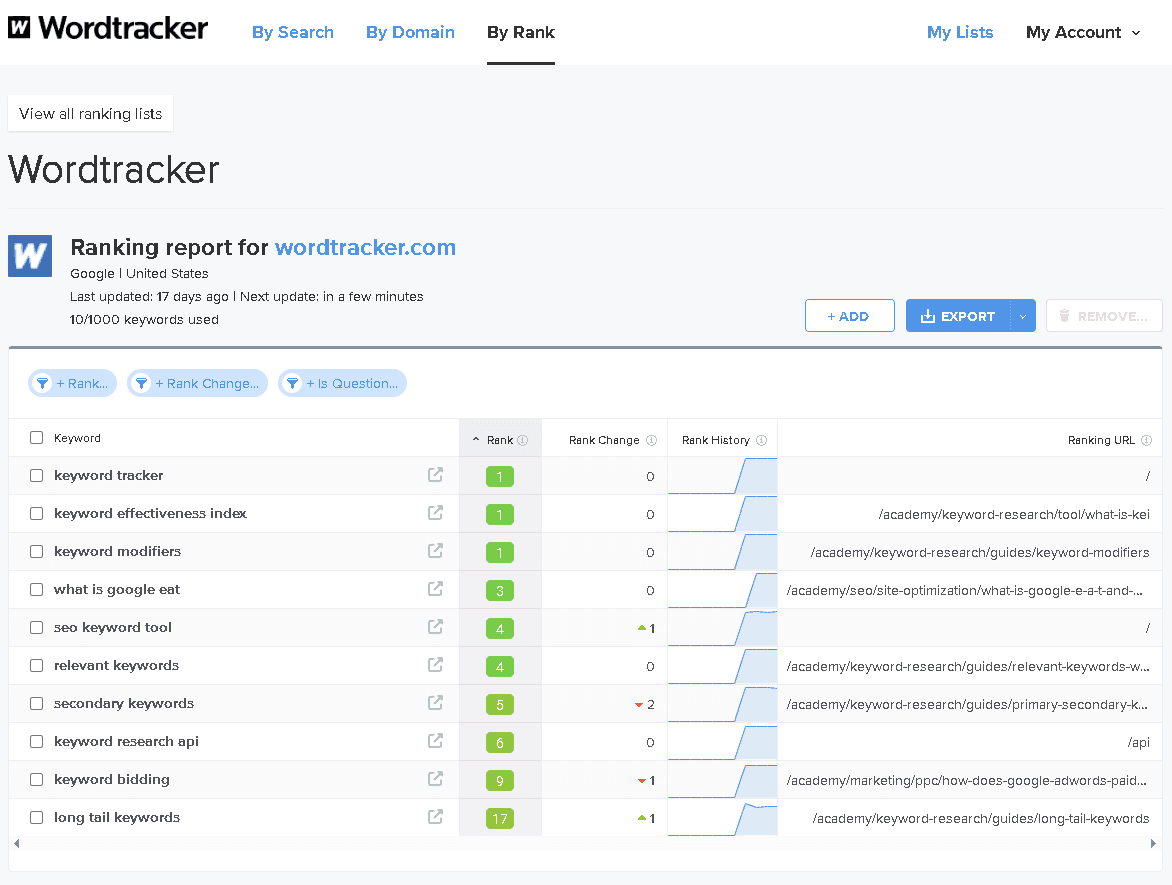
Wordtracker's rank tracking embodies our "just right" philosophy. Track your keywords, see daily movements, get alerts for significant changes. The interface prioritizes clarity over complexity, showing you what matters without the noise. You're tracking keywords that impact your business, with an emphasis on actionable data.
Each platform delivers reliable rank tracking—the choice comes down to whether you need comprehensive reporting features, balanced functionality, or streamlined essentials.
The real cost of complexity
Here's what feature comparison charts don't tell you: complexity has a cost beyond the monthly subscription.
Ahrefs requires significant time investment to master its full potential. New users typically spend weeks exploring the platform, which can be valuable for those who need its full capabilities. The regular feature updates keep the platform cutting-edge, though they do require staying current with new functionality. For power users and agencies, this investment pays dividends in comprehensive SEO intelligence.
Keysearch appears simpler, but the credit system creates its own friction. Running out of daily searches mid-research breaks your flow. The attempt to replicate premium features at budget prices means constant workarounds and compromises. You save money but spend time dealing with limitations.
Wordtracker's hidden cost is... there isn't one. The tool does what it promises, consistently. No credit anxiety, no feature FOMO, no workflow disruptions from constant updates. The time you save not learning new features or managing limitations goes directly into SEO work that moves the needle.
Support and learning curves
How each platform handles user support reveals their true nature.
Ahrefs provides extensive documentation and video tutorials through their Academy. Their blog offers excellent SEO education that benefits the entire community. While direct support often routes through help articles, the comprehensive resources mean most questions have detailed answers available. For teams willing to invest in training, Ahrefs Academy provides structured learning paths.
Keysearch offers more accessible support with a responsive team. Their simpler interface means most users can figure things out, but when you hit the platform's limitations, support can only do so much. They can't magically increase your credit limit or add depth to surface features.
Wordtracker's support reflects our focused approach. Because the tool does fewer things, there's less that can go wrong. When you do need help, you're talking to people who understand keyword research deeply, not reading from scripts. The learning curve is minimal—most users are productive within minutes, not weeks.
Ahrefs vs Keysearch vs Wordtracker: Which fits your needs?
The choice between these platforms isn't about which has the most features—it's about which philosophy aligns with how you work.
Choose Ahrefs if:
- You're running an SEO agency that needs comprehensive competitive intelligence
- You want deep integration between multiple SEO disciplines
- Budget allows for premium tools ($129-999+/month)
- You value having extensive data and features at your fingertips
- Your team will use the full ecosystem of tools
Choose Keysearch if:
- You're a blogger or small business owner seeking value
- You want multiple SEO tools in one affordable package
- You're comfortable with credit-based systems
- You need more than basic tools but not enterprise features
- You prefer an all-in-one solution to managing multiple tools
Choose Wordtracker if:
- You're a smart marketer who values both time and budget efficiency
- You want the most affordable professional-grade keyword research tool
- You prefer an interface designed for speed and ease of use
- You appreciate generous search limits without credit anxiety
- You believe in mastering essential tools rather than juggling features
Experience focused keyword research
Ready to see what professional-grade keyword research looks like without the complexity? Try Wordtracker for just $10 for your first month.
The SEO tool industry keeps pushing the narrative that more features equal more value. But after nearly three decades in business, Wordtracker proves that doing a few things exceptionally well beats doing everything adequately. Sometimes the best tool isn't the one with the most features—it's the one that helps you get results.
This article was originally published in March 2026.