
Ubersuggest vs Keysearch (vs Wordtracker): Which tool to choose in 2026?
Do you need an all-in-one SEO suite, or would a focused keyword research tool serve you better?
Ubersuggest: The All-in-One SEO Platform
Neil Patel's comprehensive SEO platform combines keyword research with site audits, content optimization, and competitor analysis. With AI features and a generous free tier, it's designed for marketers who want everything under one roof.
The platform's breadth makes it particularly valuable for those building complete SEO strategies from scratch.
Keysearch: The Accessible Middle Ground
Targets bloggers and small businesses who want to experiment with multiple SEO tools including keyword research, rank tracking, and a content assistant. At budget-friendly pricing tiers, it offers an impressive feature set that bridges the gap between basic tools and enterprise platforms.
It's ideal for users who want multiple SEO capabilities without multiple subscriptions.
Wordtracker: Specialized Excellence
Takes a deliberately different approach. Since 1998, we've focused on perfecting three core functions: keyword research, competitor analysis, and rank tracking. By maintaining this focus and avoiding feature expansion, we deliver professional-grade keyword data at straightforward pricing.
For smart marketers who value depth over breadth and ROI over feature bloat, Wordtracker offers precision tools without the complexity—at the most affordable pricing.
If Wordtracker's focused approach resonates with you, see it in action...
Ubersuggest vs Keysearch vs Wordtracker at a glance
Each platform serves different user needs with distinct approaches:
- Ubersuggest is Neil Patel's vision of an all-in-one SEO platform, offering everything from keyword research to site audits, content creation tools, and AI features.
- Keysearch positions itself as the accessible middle ground—more comprehensive than basic tools but less complex than enterprise platforms, perfect for growing websites.
- Wordtracker maintains a laser focus on core keyword research functionality, delivering professional-grade data through streamlined tools.
Here's the fundamental difference: While Ubersuggest and Keysearch compete on feature count, Wordtracker competes on doing the essentials exceptionally well at the lowest price.
| Ubersuggest | Keysearch | Wordtracker | |
|---|---|---|---|
| Core Focus | All-in-one SEO suite | Comprehensive SEO toolkit | Specialized keyword research |
| Ease of Use | Feature-rich interface ⭐⭐⭐ | User-friendly design ⭐⭐⭐⭐ | Lightning-fast workflows ⭐⭐⭐⭐⭐ |
| Keyword Data | Extensive with credit system ⭐⭐⭐⭐ | 200 to 500 daily credits ⭐⭐⭐ | 500 to unlimited daily searches ⭐⭐⭐⭐⭐ |
| AI Features | Comprehensive AI suite ⭐⭐⭐⭐⭐ | Growing AI capabilities ⭐⭐⭐ | GSC integration focus ⭐⭐ |
| Additional Tools | Full SEO toolkit ⭐⭐⭐⭐⭐ | Multiple helpful tools ⭐⭐⭐⭐ | Essential keyword research functions ⭐⭐⭐⭐ |
| Pricing Model | Credit-based system | Clear tier pricing | Straightforward plans |
| Best For | Marketers wanting everything | Bloggers needing multiple tools | SEO pros and small businesses wanting focused research |
Different philosophies: All-in-one vs specialized
The SEO tool industry offers two distinct approaches, each with its own merits.
Ubersuggest started as a simple keyword suggestion tool but has evolved into a comprehensive platform. Today, you'll find keyword research integrated with site audits, backlink analysis, content ideas, and AI-powered features. This evolution reflects the needs of marketers who prefer consolidated tools over managing multiple subscriptions.
Keysearch takes a balanced approach. Beyond keyword research, it includes rank tracking, a content assistant, backlink checker, and competitive analysis tools. They're actively developing AI features like "Foresight" to enhance their value proposition. This comprehensive approach works well for users who want multiple capabilities at an accessible price point.
Wordtracker represents a different philosophy entirely. After 25+ years in the market, we've maintained our focus on three core functions: keyword research, competitor analysis, and rank tracking. This specialization allows us to go deeper into these specific areas while keeping the interface clean and the pricing transparent.
Each approach has merit—the key is matching the tool philosophy to your specific needs and workflow preferences.
AI integration: Innovation and implementation
While all three platforms offer keyword research, their implementations reflect different priorities.
Ubersuggest leads with AI integration, using machine learning for keyword suggestions, content ideas, and competitive insights. Their "AI Writer" helps create SEO-optimized content, while other AI features analyze competitors and suggest strategies. For users who embrace AI-assisted workflows, these features can significantly speed up content planning and creation.
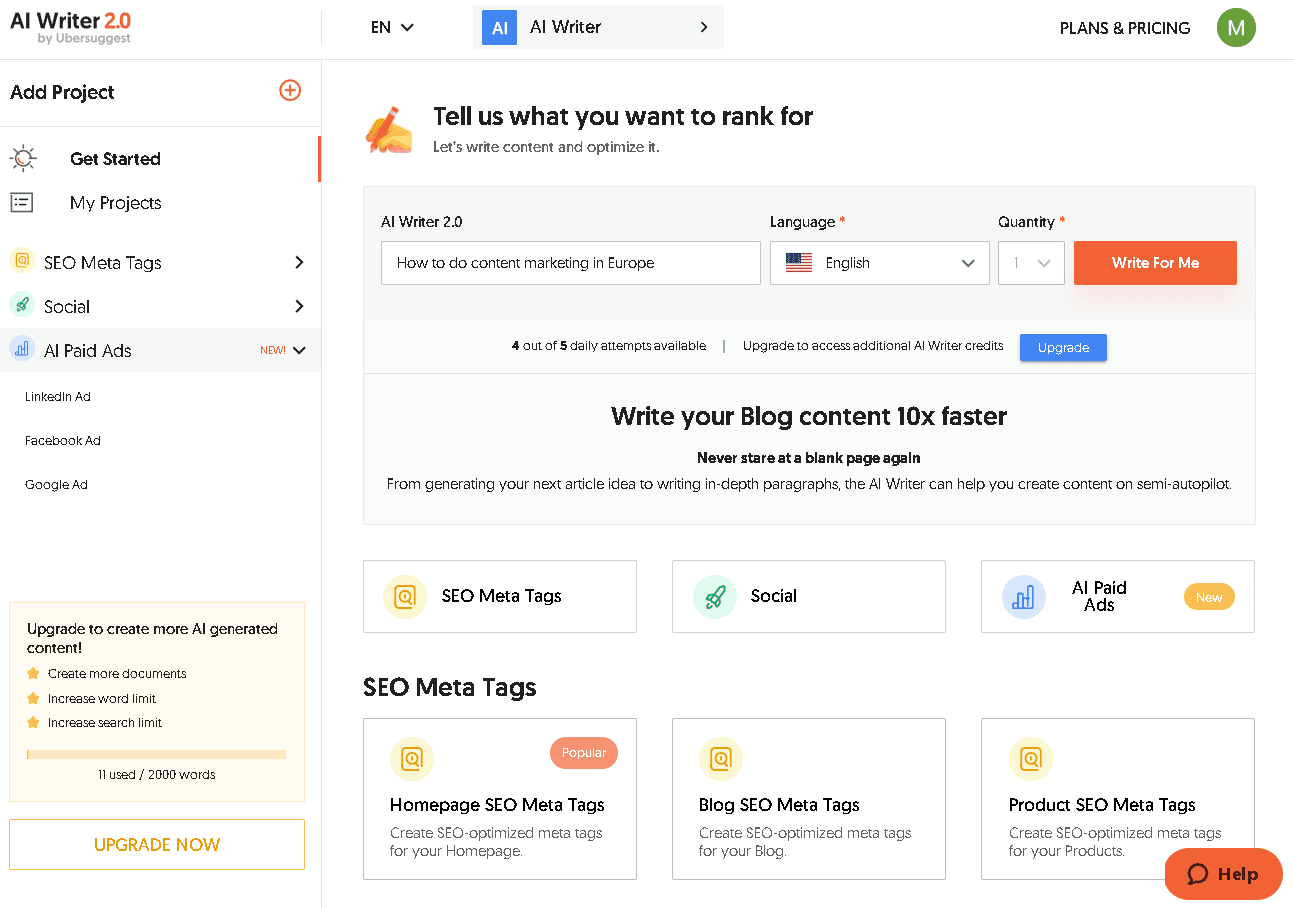
The platform uses a credit system to manage AI usage, which helps control costs while ensuring fair access across users. This approach works well for those who use AI features strategically rather than constantly.
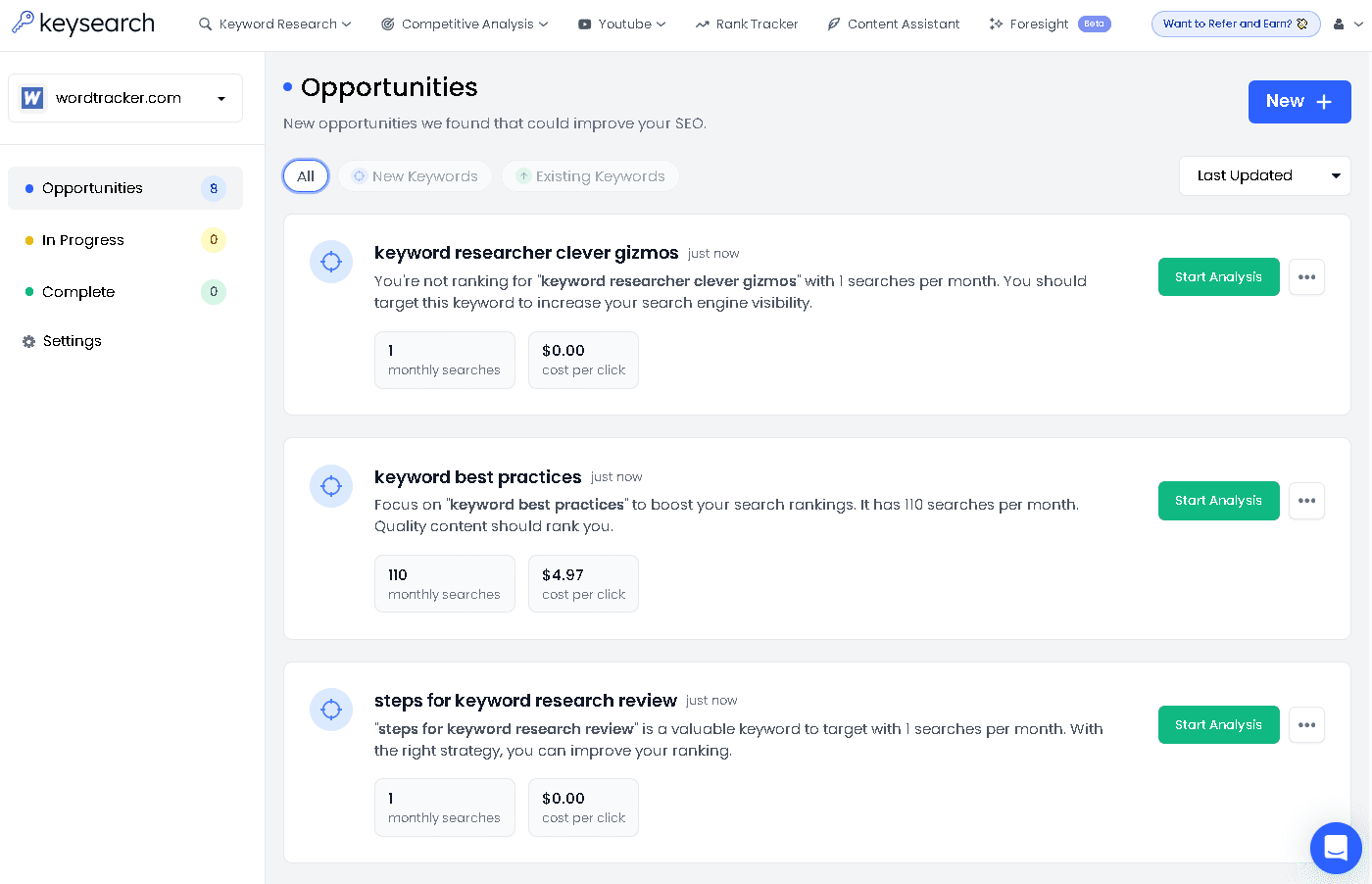
Keysearch takes a more measured approach to AI. Their "Foresight" tool (currently in beta) automates aspects of keyword research and provides strategic recommendations. Available on the Pro plan, it represents their commitment to evolving with technology while maintaining their core functionality. As the feature develops, it could become a significant differentiator for the platform.
Wordtracker focuses on data accuracy over AI predictions. Our primary technology integration is with Google Search Console, which provides real performance data from your actual site. While we don't offer AI content generation, this approach ensures our users work with verified data rather than predictions.
Different users need different levels of AI assistance—there's no single right answer to how much AI integration is optimal.
The comprehensive toolkit approach
Both Ubersuggest and Keysearch embody the modern trend toward comprehensive SEO platforms.
Keysearch offers an impressive suite for its price point. The platform includes keyword research, rank tracking, competitive analysis, backlink checking, and a content assistant. Each tool is well-designed and functional, making it an excellent value for users who will actively use multiple features.
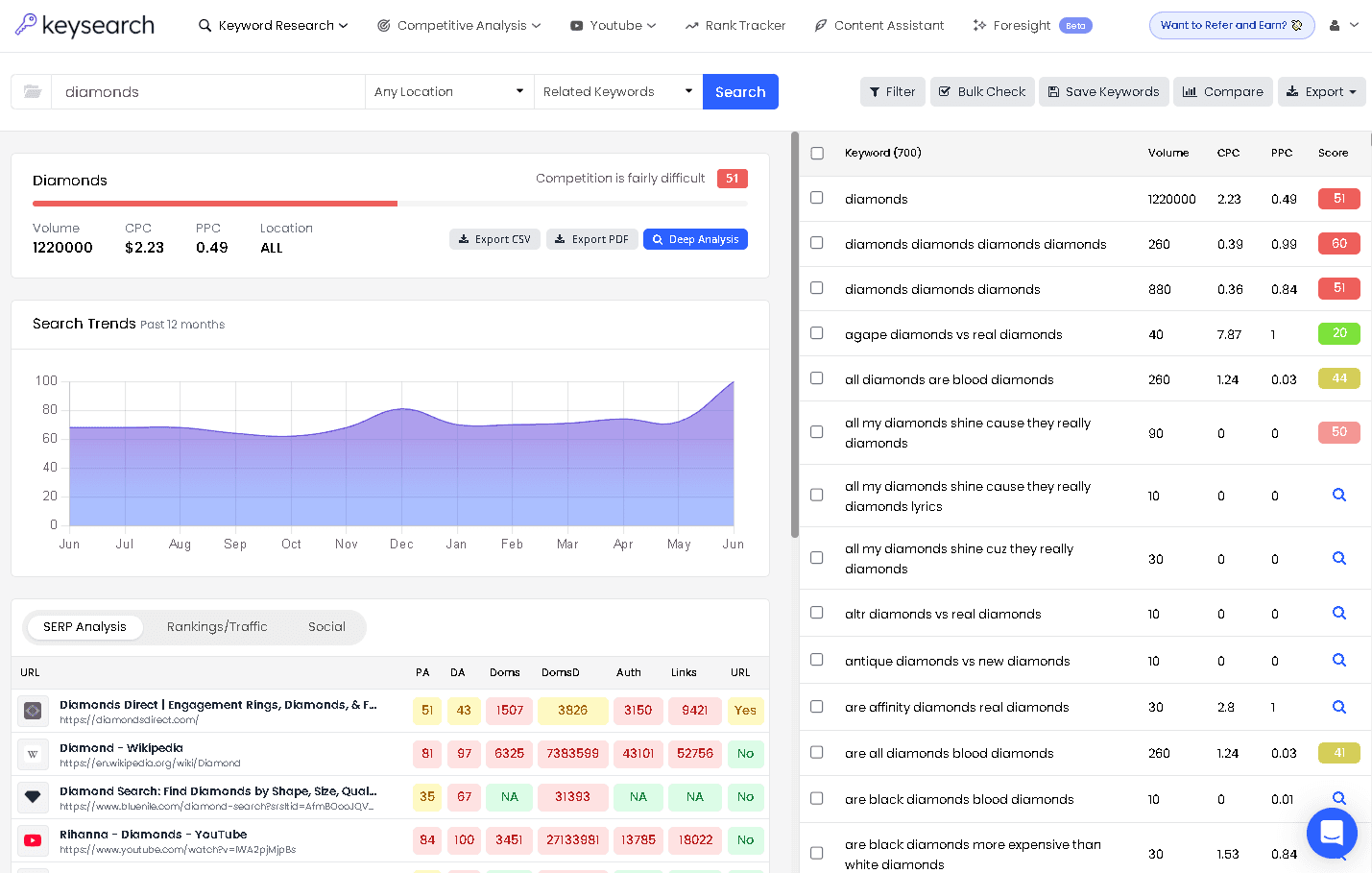
The daily search limits (200 on Starter, 500 on Pro) help keep costs reasonable while ensuring platform sustainability. For most bloggers and small businesses, these limits provide ample capacity for regular SEO work.
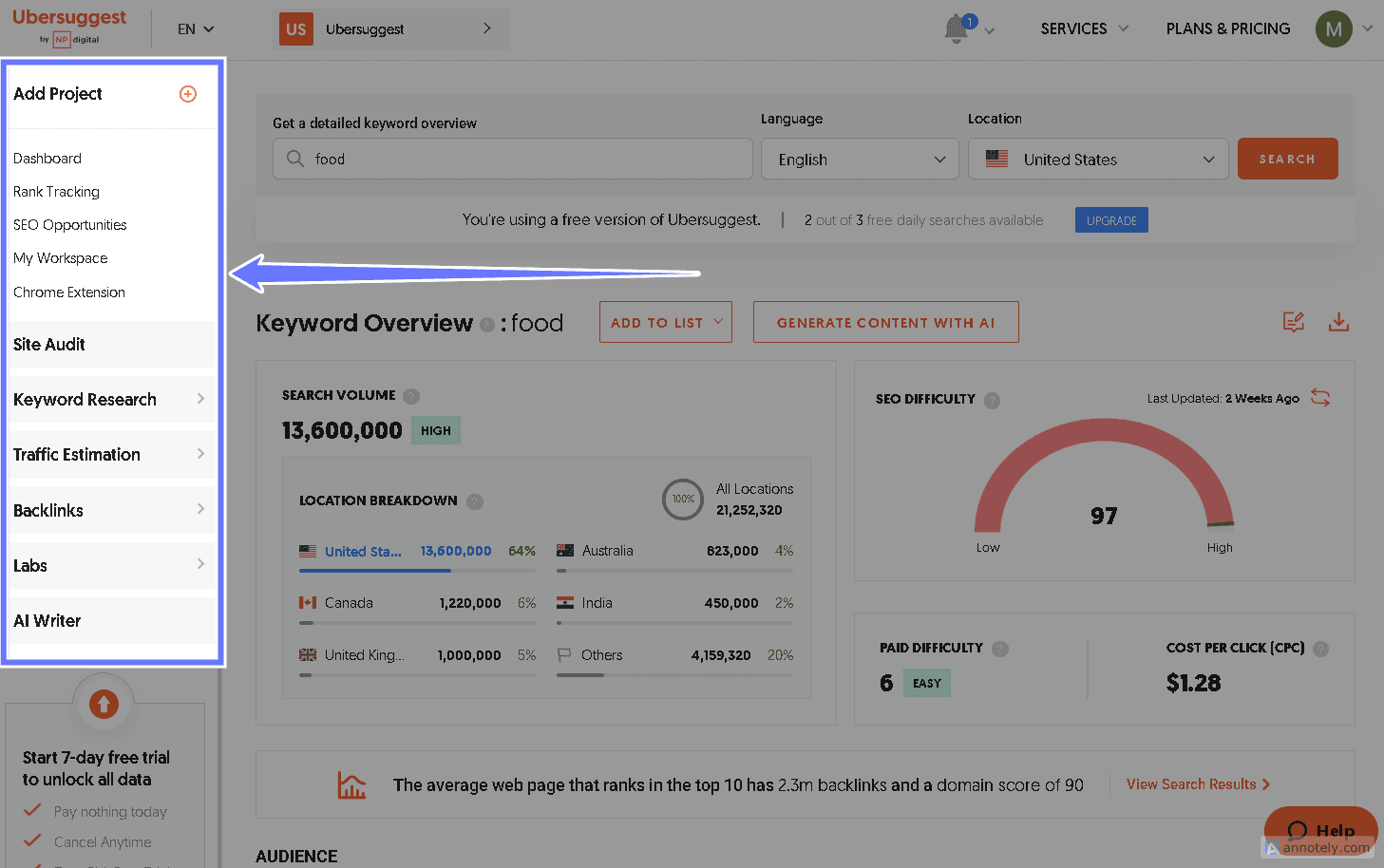
Ubersuggest goes even further with its all-in-one approach. The platform aims to be your complete SEO command center, offering tools for every aspect of search optimization. This comprehensive nature particularly benefits users who are building their SEO knowledge alongside their websites, as everything is integrated and interconnected.
The case for focused functionality
Wordtracker's approach might seem minimalist in comparison, but this focus brings distinct advantages. Our platform provides three core tools: keyword research, competitor analysis, and rank tracking. Each tool is refined to deliver exactly what SEO professionals need.
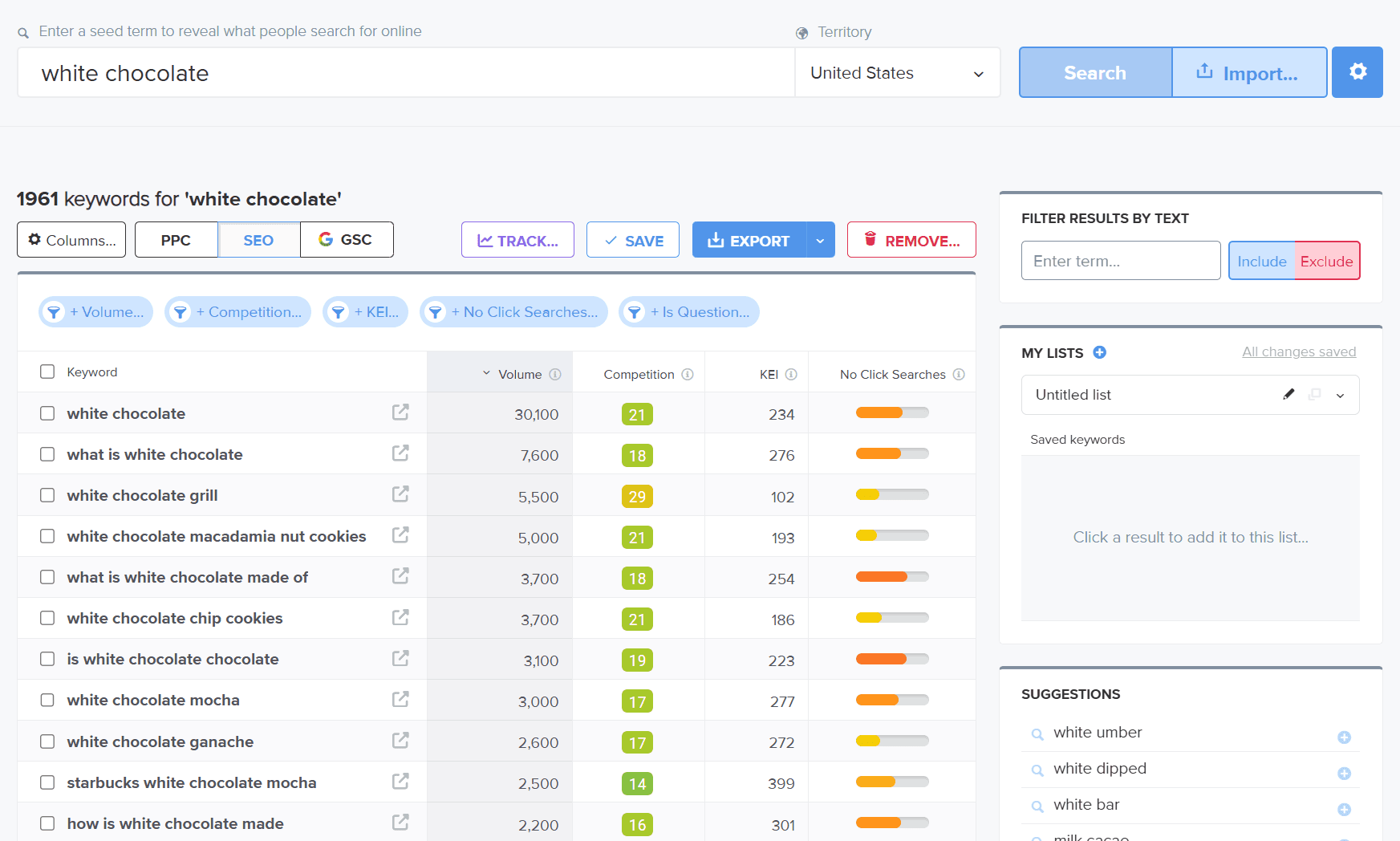
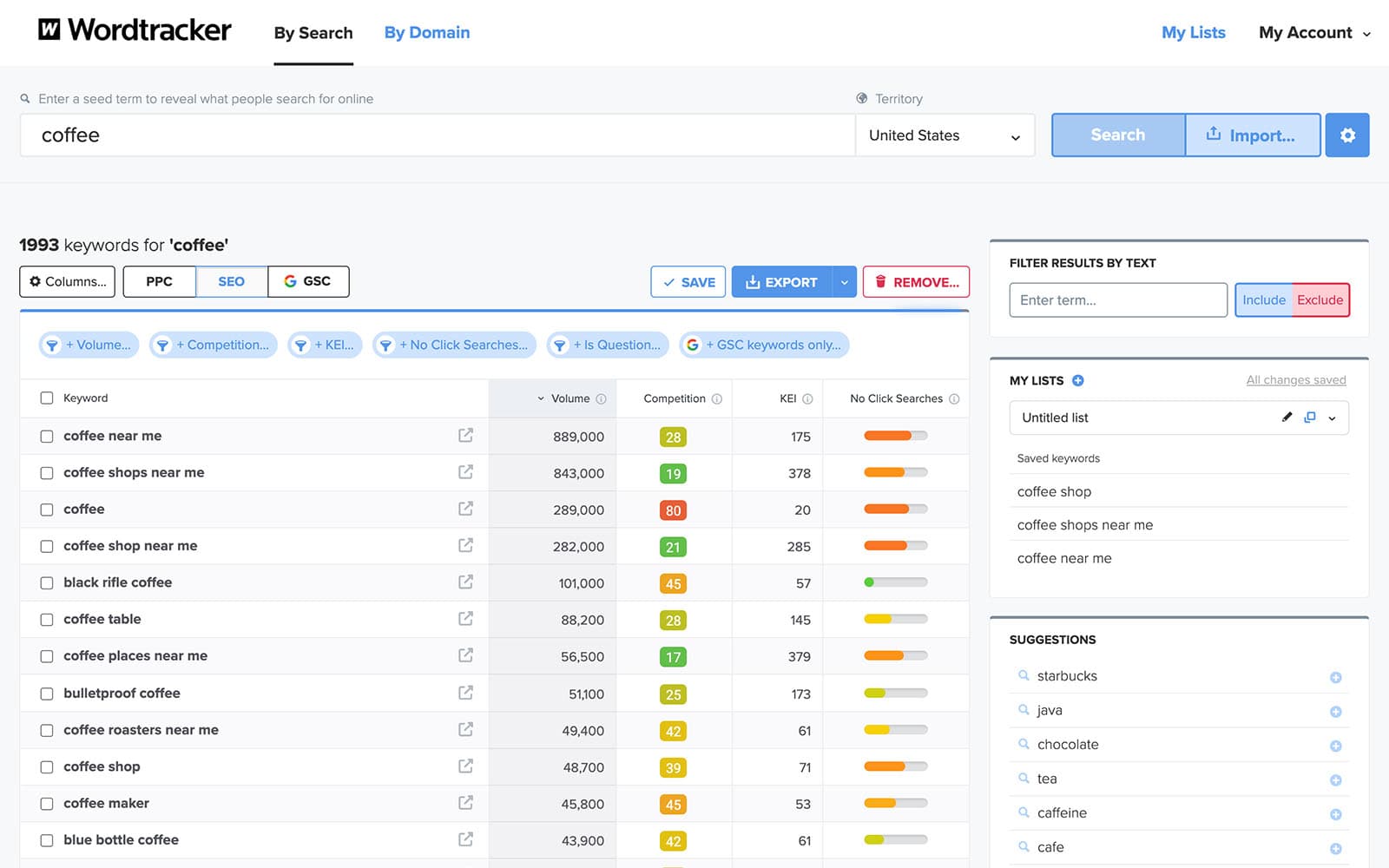
The keyword research tool delivers comprehensive data including search volume, competition scores, and KEI (Keyword Effectiveness Index). The interface prioritizes efficiency and ease of use above all else. You'll find keywords in seconds, not minutes. Data is presented in a logical, actionable format that respects your time. You can filter results, save lists, and export data without navigating complex menus or managing credits.
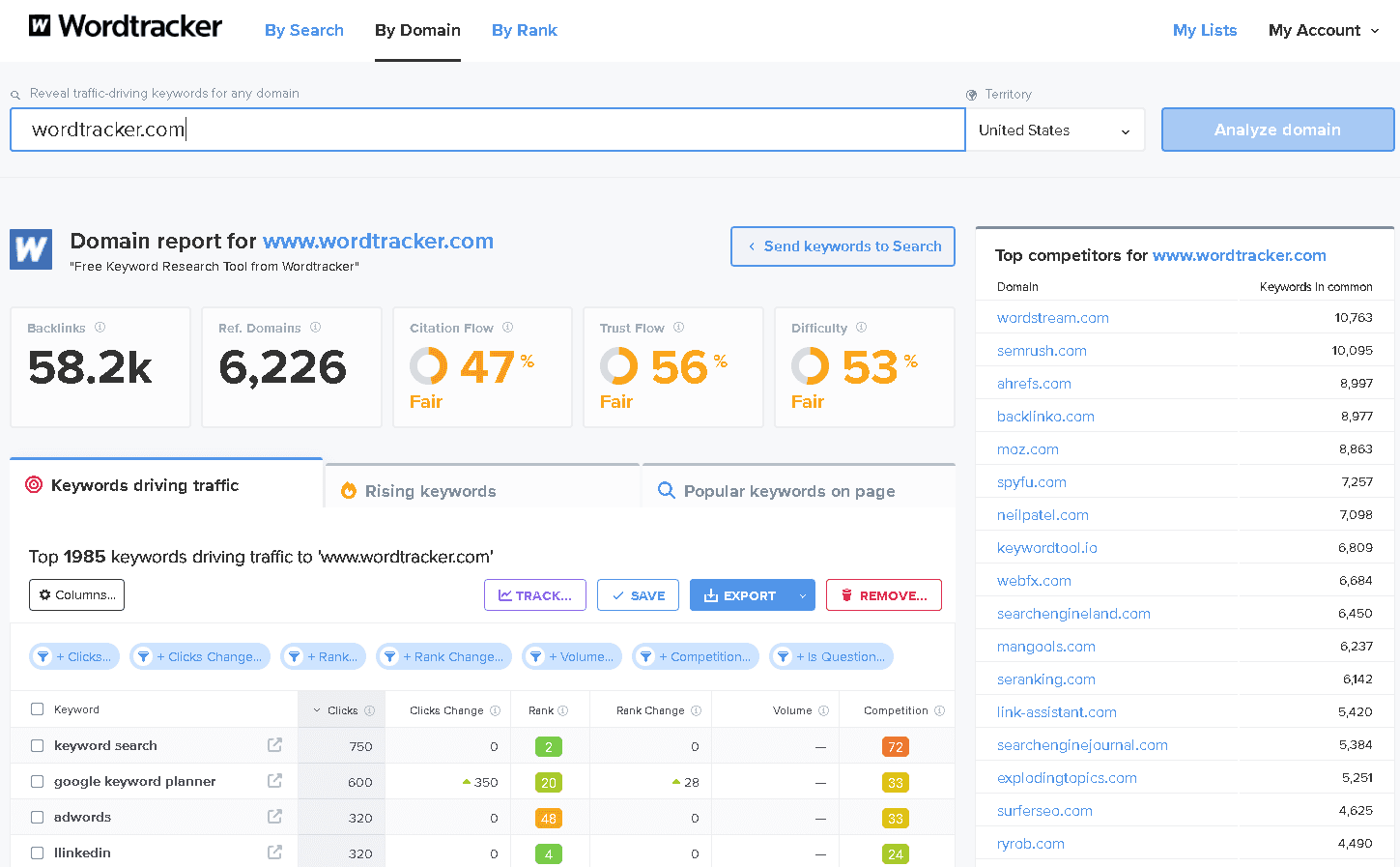
Competitor analysis shows exactly what keywords your rivals rank for, their top pages, and traffic estimates. It's straightforward competitive intelligence designed for quick insights and fast action.
The rank tracking monitors your positions with clear reporting and customizable alerts.
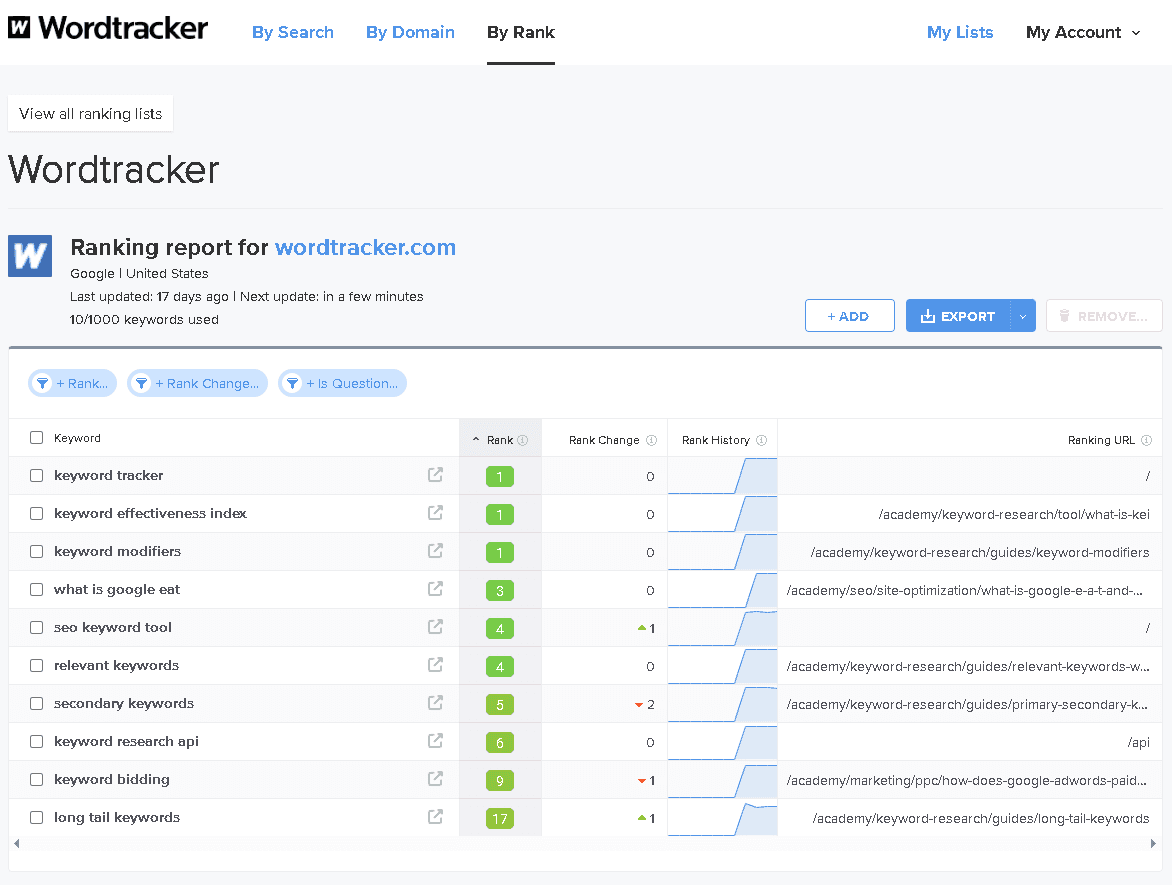
This focused approach means every feature gets the attention it deserves. Rather than spreading development across dozens of tools, we continuously refine our core offerings. For users who have established workflows and preferred tools for other tasks, this specialization provides exactly what's needed without redundancy.
Pricing models reveal priorities
The pricing structures of these platforms reflect their different approaches and target markets.
Ubersuggest starts at $29/month with a credit-based system that scales with usage. This model works well for variable needs—light users pay less while heavy users can upgrade as needed. The free tier also provides substantial functionality, making it easy to test the platform before committing.
Keysearch offers transparent pricing at $24/month (Starter) and $48/month (Pro), with annual discounts available. You're paying for the full suite of tools, which represents excellent value if you actively use multiple features. The Pro plan's AI capabilities add another layer of value for those ready to embrace automated assistance.
Wordtracker keeps pricing straightforward at $24/month (Bronze - 500 searches/day), $69/month (Silver - 1,000 searches/day), and $99/month (Gold - unlimited searches). All plans include access to all territories, with the only difference being daily search volume. This transparent approach means you know exactly what you're investing in and can scale predictably as your needs grow.
When evaluating value, consider not just the total cost but the cost per feature you'll actually use. A focused tool at $24/month might deliver better ROI than a comprehensive platform at $48/month if you only need specific functionality.
Data quality across platforms
An important truth about keyword tools: most access similar data sources. The differentiation comes in processing, presentation, and additional insights.
Ubersuggest leverages its large database effectively, with AI enhancement adding another layer of insight. The platform excels at surfacing trends and opportunities that might not be immediately obvious from raw data. This makes it particularly valuable for users who want guidance alongside data.
Keysearch provides reliable data accuracy with its "True Volume" algorithm that ungroups Google's close variants. This attention to detail helps users understand real search demand rather than inflated numbers. The platform balances data depth with accessibility, making it approachable for non-technical users.
Wordtracker takes what we call a "refinery" approach. We source industry-standard data but focus intensely on processing accuracy. By maintaining a lean operation without costly proprietary crawling infrastructure, we deliver professional-grade data efficiently. Our GSC integration adds real-world performance data to complement search volume estimates.
All three platforms provide reliable keyword data—the differences lie in presentation, additional insights, and workflow integration.
User experience comparisons
User experience extends beyond aesthetics to workflow efficiency and data accessibility.
Ubersuggest's interface reflects its comprehensive nature. The dashboard provides numerous entry points to different tools, which can be overwhelming initially but becomes intuitive with use. The platform rewards exploration, with interconnected features that surface insights across different areas of SEO.
Keysearch achieves an impressive balance between functionality and usability. The interface is clean and logical, with clear navigation between tools. New users can become productive quickly, while advanced features remain accessible without cluttering the experience. This thoughtful design makes it particularly appealing to growing businesses.
Wordtracker's interface prioritizes efficiency above all else, because smart marketers shouldn't waste time navigating complex menus. Every element serves a specific purpose: search for keywords, analyze results, save lists, export data. The workflow is linear and fast, designed for professionals who know what they need and want to find it quickly. What might appear simple actually represents careful design choices to minimize friction.
Ubersuggest vs Keysearch vs Wordtracker: Making your choice
Selecting the right platform depends on your specific needs, workflow preferences, and growth trajectory.
Choose Ubersuggest if:
- You want a comprehensive SEO platform with cutting-edge AI features
- You're building a content-focused website from scratch
- You value having site auditing and backlink analysis integrated with keyword research
- You appreciate Neil Patel's educational content and community
- You prefer one platform over multiple specialized tools
Choose Keysearch if:
- You're a blogger or small business wanting multiple SEO tools at an accessible price
- You need a balance between features and simplicity
- The content assistant and rank tracking add significant value to your workflow
- You want growing AI capabilities without enterprise pricing
- You prefer clear, predictable pricing over credit systems
Choose Wordtracker if:
- You need focused, professional-grade keyword research without distractions
- You value efficiency and clarity over feature quantity
- You want predictable pricing without credit limitations
- You already have established tools for content creation and site auditing
- You believe specialized tools outperform generalist platforms
Experience focused keyword research
Ready to see what professional-grade keyword research looks like without the complexity? Try Wordtracker for just $10 for your first month.
The SEO tool market offers excellent options for every need and philosophy. Whether you prefer comprehensive platforms with AI innovation, balanced toolkits with growing capabilities, or focused tools that excel at specific tasks, the key is choosing the approach that matches your workflow and goals.
This article was originally published in March 2026.